


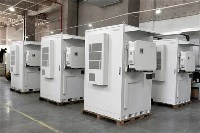
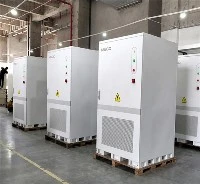
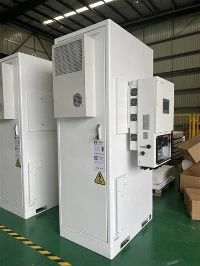
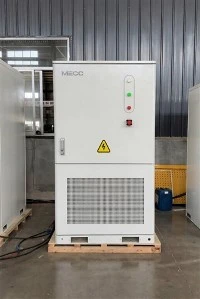
An outdoor battery cabinet is a box of valuable metals sitting at the edge of a property, often behind little more than a fence - and increasingly, thieves have noticed. Copper cabling, power conversion modules, and even the cells themselves have real scrap and resale value, and unlike a substation, a installation is frequently unstaffed, unlit, and out of sight. Physical security is therefore not a paranoia item; it is an operating cost item, an insurance item, and increasingly a warranty condition.
This guide covers what is actually at risk, the layered security model that works, the design features worth specifying, and how your monitoring platform doubles as a theft-detection system.
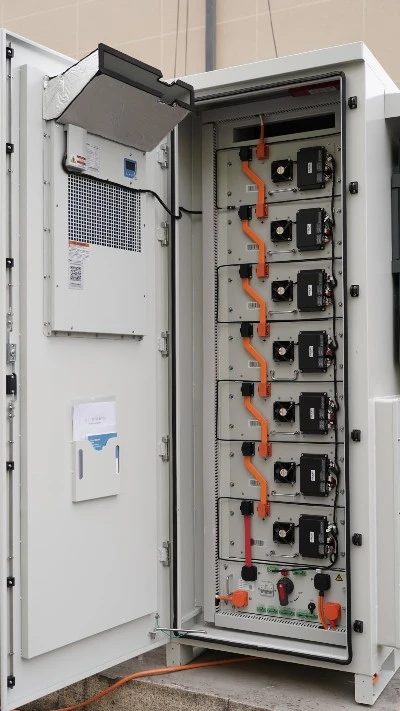
Copper. Ground cables, AC/DC cabling, and bus connections. Copper theft is the most common incident at electrical sites of every kind - low skill, fast payoff, and it happens even to energized equipment.
PCS power modules and electronics. Rack-mounted conversion modules and control hardware are compact, valuable, and resalable.
Battery modules. Heavy and harder to move, but not immune - organized theft with a vehicle and time can take them, and the scrap/value market for lithium cells keeps growing.
Vandalism and break-in damage. Often causes more loss than the theft itself - breached enclosures on electrical equipment mean downtime, inspection, and sometimes fire-risk re-assessment before re-energizing.
. A staged site with containers, cabling reels, and no energized monitoring is the easiest target the project will ever be.
is not one product - it is four layers that each buy something:
Deter. Make the site look like a bad target: perimeter fencing at adequate height with anti-climb topping, continuous lighting (motion-activated is fine and cheaper to run), clear signage (both legal warnings and monitoring notices), and general visibility - a site that can be seen from an occupied building or a road gets skipped in favor of a darker one.
Detect. Know when someone is there: CCTV with recording (edge-stored so cutting the uplink does not erase evidence), motion sensors, door-contact switches and tamper switches on every enclosure, and - underrated - . A cut ground cable or a disconnected module shows up in the monitoring data as a ground fault, an imbalance, or a sudden availability change. Your platform is already a theft sensor if it is configured to alert on those patterns.
Delay. Buy response time: quality locks (padlocks are better than hasps, but coded cabinet locks with audit trails are better still), anti-pry door edges, bollards or concrete barriers against vehicle ramming, and locked cable trenches or conduits where copper runs above ground.
Respond. Detection only matters if something happens next: alarms routed to a monitored station or an on-call list, a defined response procedure (who is called, what they check, when police are engaged), and camera footage retention long enough to be useful.
Skip any layer and the others degrade - a camera no one monitors is scenery, and a fence no camera watches is a delay without a report.

Security is cheapest when designed in rather than bolted on. When comparing cabinets and site designs, look for:
, so breach events land in the same alarm stream as battery faults - one platform, one escalation path.
on unauthorized entry - most opportunistic thieves leave immediately when a cabinet starts screaming.
built into the cabinet or pad design, with conduit ready.
Lockable, code-managed access - keys with audit or code-based locks so you know credential opened the door and when. Service access still needs to be convenient for technicians; the design question is how the two coexist (see service access and clearances - security and maintainability are solved together, not in sequence).
on high-value modules where practical, so stolen equipment has a chance of recovery.
that also happens to satisfy the vehicle-impact thinking your fire-code setback discussion may already require.
are converging. A camera or access system that sits on the site network is itself an attack surface - put security devices on a segregated VLAN and treat their firmware like any other connected device.
Underwriters increasingly ask what physical protection a storage installation has - fencing, monitoring, alarm response - and price or condition coverage accordingly. The security specification you build for operational reasons is the same document that answers the questionnaire. Keep it written down: layers, devices, response procedure, retention periods. A site with a documented security plan pays for it twice - once in avoided losses, once in premium.
Two planning-stage decisions do more than any gadget:
Visibility and neighbors., treat natural surveillance as a siting criterion. Placement visible from occupied buildings, staffed areas, or roads - with lighting - beats a hidden corner every time. Concealment protects aesthetics; it also protects thieves.
The construction window. Between delivery and commissioning, the system is valuable, partly accessible, and unmonitored. Tighten the schedule for cabling and module installation, stage high-value components late and secure, lock and log every container during laydown, and if the site will sit partially built for months, budget temporary security (cameras, lighting, patrols) for exactly that window. The phase is part of the threat model, not a gap before it starts.
is a four-layer system - deter, detect, delay, respond - designed in from the layout stage, wired into the same monitoring platform as every other alarm, and documented for your insurer. Copper, modules, and cells are worth stealing; a site that is visible, lit, alarmed on both doors and electrical anomalies, and monitored with a response path is, in practice, almost never the one that gets hit. Specify the layers, rehearse the response, and close the construction window - the cheapest security is the incident that never happens.

MECC 50KW 112KWH BESS Battery Energy Storage System
The MECC 50kw 112kWh Battery Energy Storage Cabinet is a high-capacity energy storage solution designed for industrial and commercial applications. Featuring 358V, 314Ah lithium iron phosphate (LiFePO4) battery, it ensures long-lasting, safe, and efficient energy storage.
High-efficiency 50kW/112kWh Industrial and Commercial Energy Storage System (C&I ESS). Features LiFePO4 battery, peak shaving, and smart EMS. Reduce operational costs and ensure power backup. Inquire for custom BESS solutions.
less than 1.2 square meters, this 112kWh cabinet features a pre-integrated all-in-one design, reducing on-site installation time by 40% compared to modular rack systems.